

Every volleyball player knows the moment. A shanked pass, a missed serve, a call that didn’t go your way, and suddenly the next point feels heavier than the last one. Practice time usually goes to passing, setting, and hitting, but how an athlete handles that moment often decides the set.
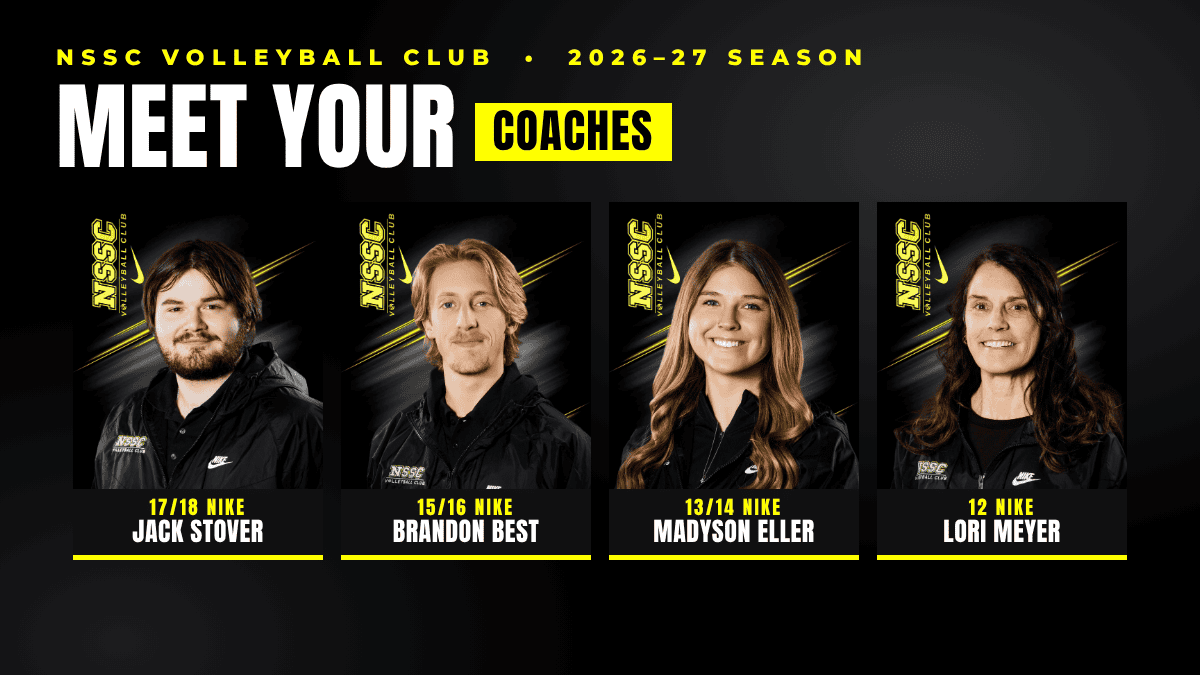
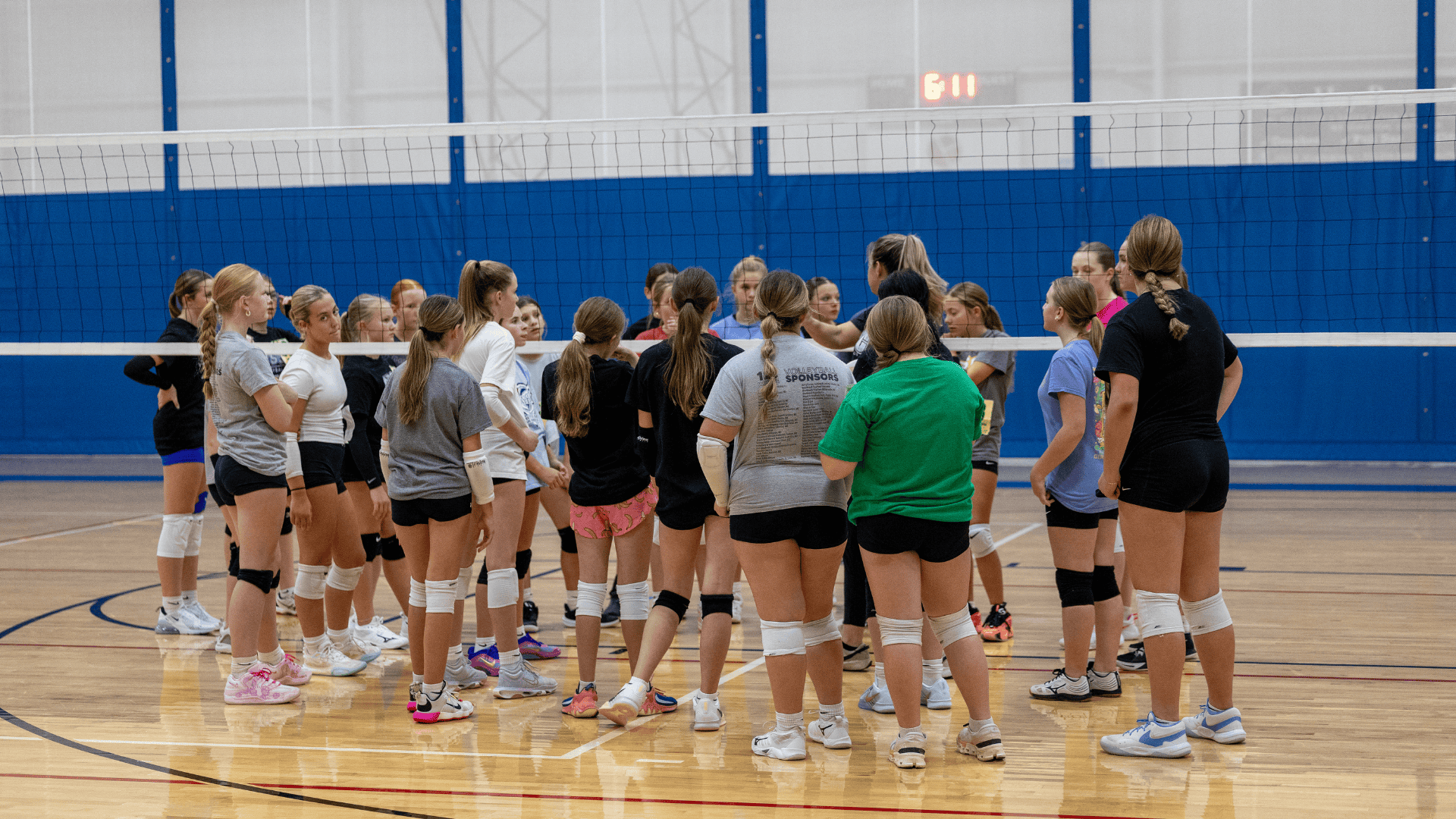
That’s why volleyball mental toughness is a major focus for NSSC this season. Our coaches are building it into how we practice, how we compete, and how we talk with athletes and families. Here’s what we’re teaching, why it matters, and how you can support it at home.
Table of Contents
What Mental Toughness Really Means (and What It Doesn’t)
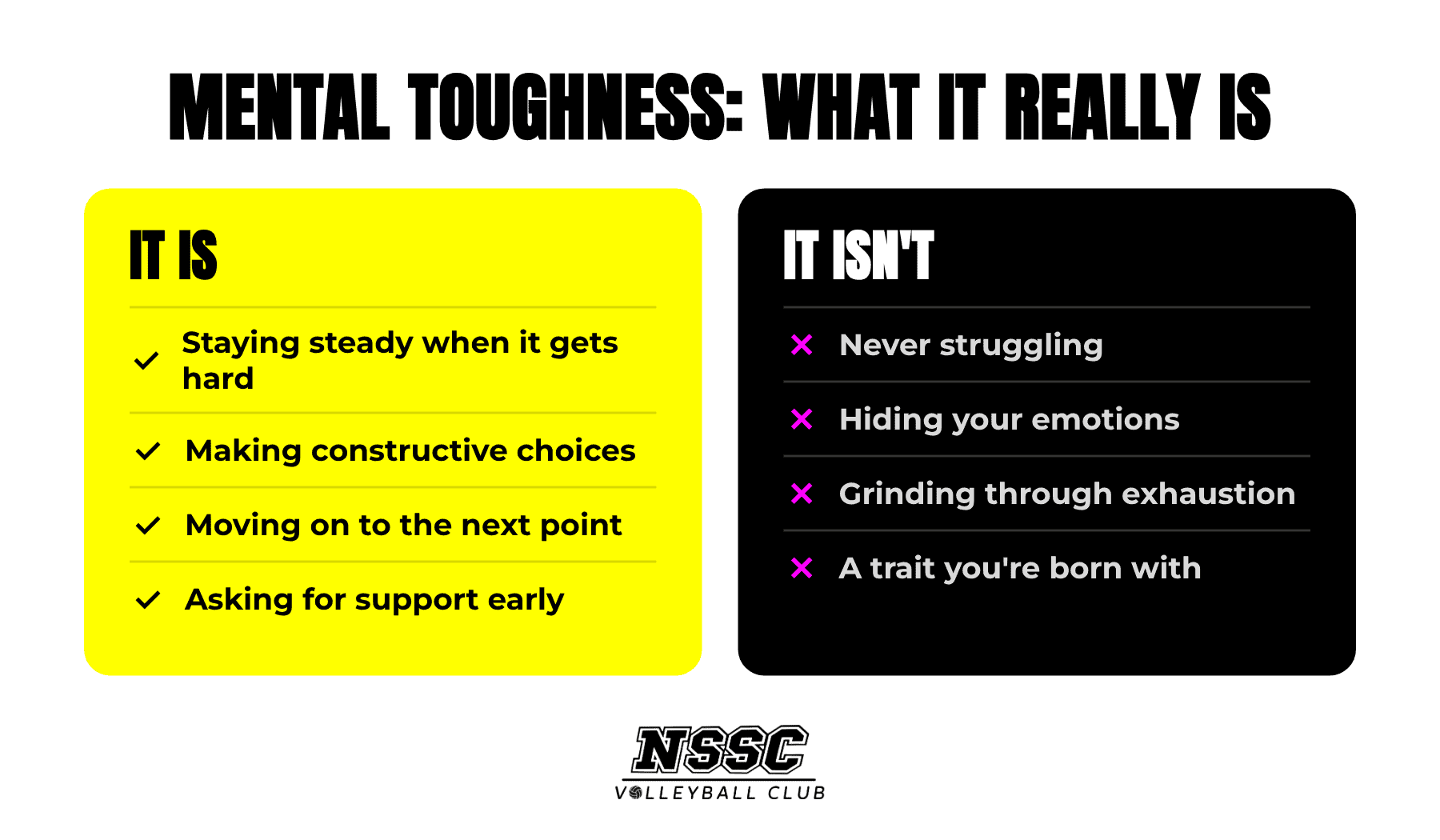
Mental toughness is not about never struggling. Every athlete struggles. It’s the ability to stay steady, make constructive choices, and keep moving forward when things get hard.
It’s also not about hiding emotions or grinding through exhaustion. And it isn’t a personality trait some kids are born with and others aren’t. Our theme for the year says it simply: mental toughness is trained, not given.
That means we build it the same way we build a good platform or a consistent serve, through small, repeatable behaviors. Done over and over, those behaviors strengthen confidence, resilience, and trust across our teams and families. It’s a natural fit for what NSSC has always stood for: Nurturing Skill, Strength, and Confidence.
The 4 Volleyball Mental Toughness Habits We’re Training on the Court
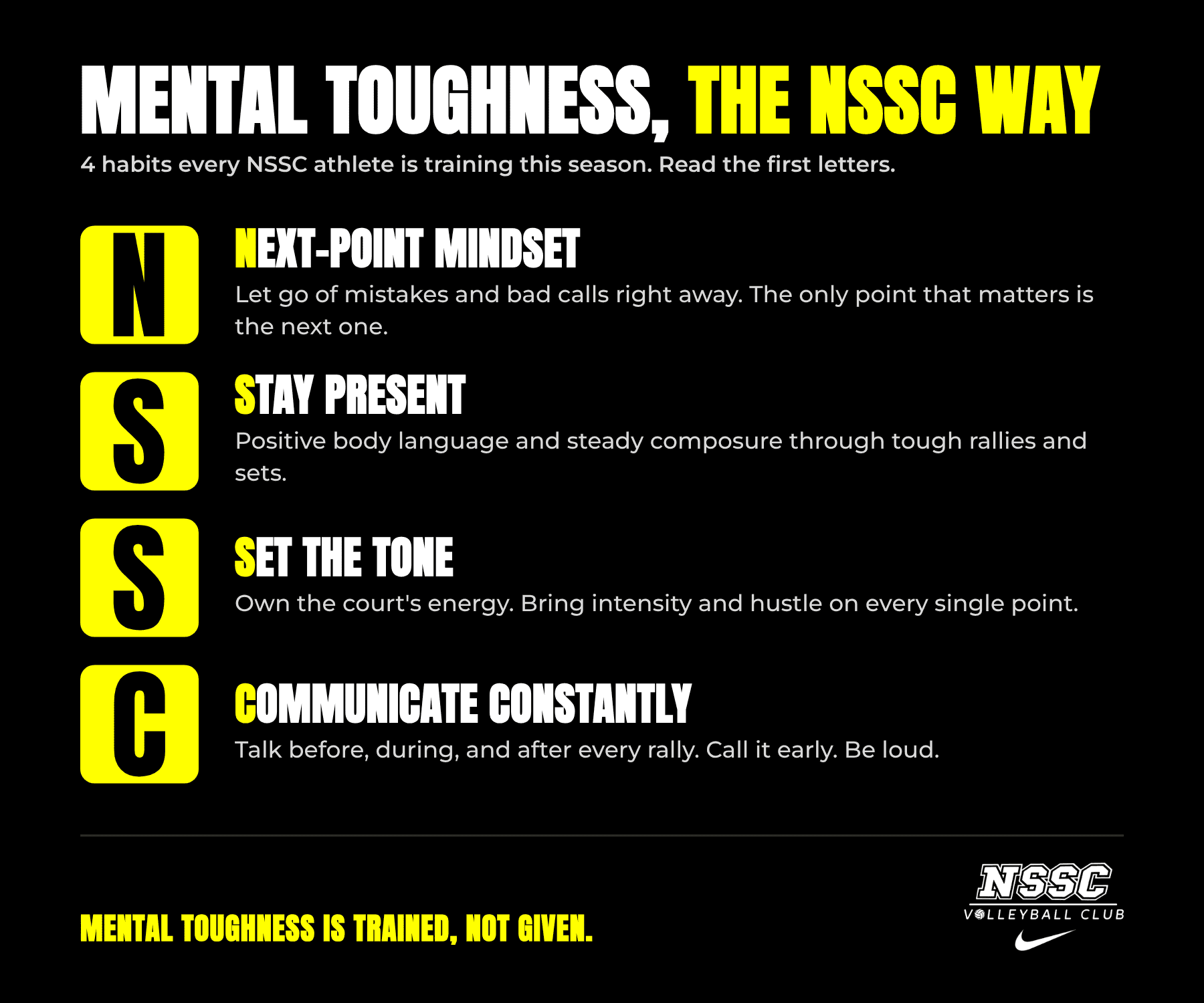
Our on-court approach this year runs under one message: Think Strong. Play Stronger. Here are the four habits every NSSC athlete will hear about, practice, and be recognized for. Look at the first letter of each one. Together, they spell N-S-S-C, so every time our athletes see the club name, they see the habits behind it.
N: Next-Point Mindset
Let go of mistakes or bad calls immediately. The only point that matters is the next one. A player who is still replaying the last error can’t fully show up for the next serve receive.
S: Stay Present
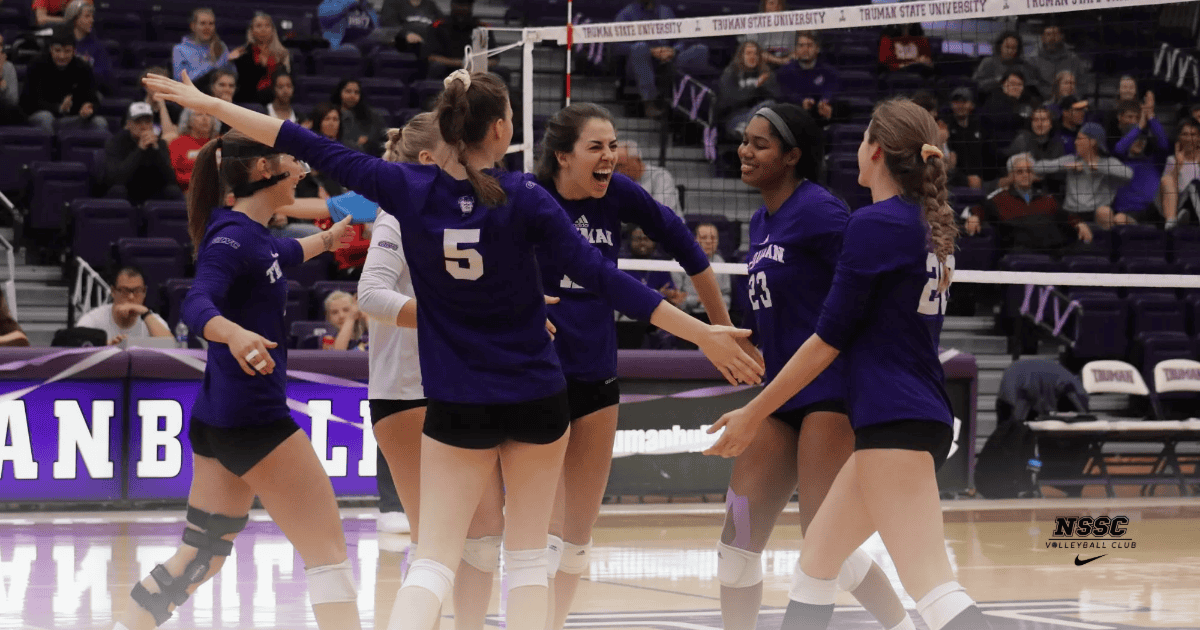
Keep body language positive and stay composed during tough rallies and sets. Slumped shoulders and frustrated looks spread quickly through a team. Composure spreads too.
S: Set the Tone
Own the court’s energy. Bring high intensity and hustle on every point, and make your team known. Energy is a choice every athlete can make, no matter the score.
C: Communicate Constantly
Talk before, during, and after every rally. Call the ball early, support your teammates, and be loud. Communication keeps players connected to each other instead of stuck inside their own heads.
How We Help Athletes Respond to Setbacks
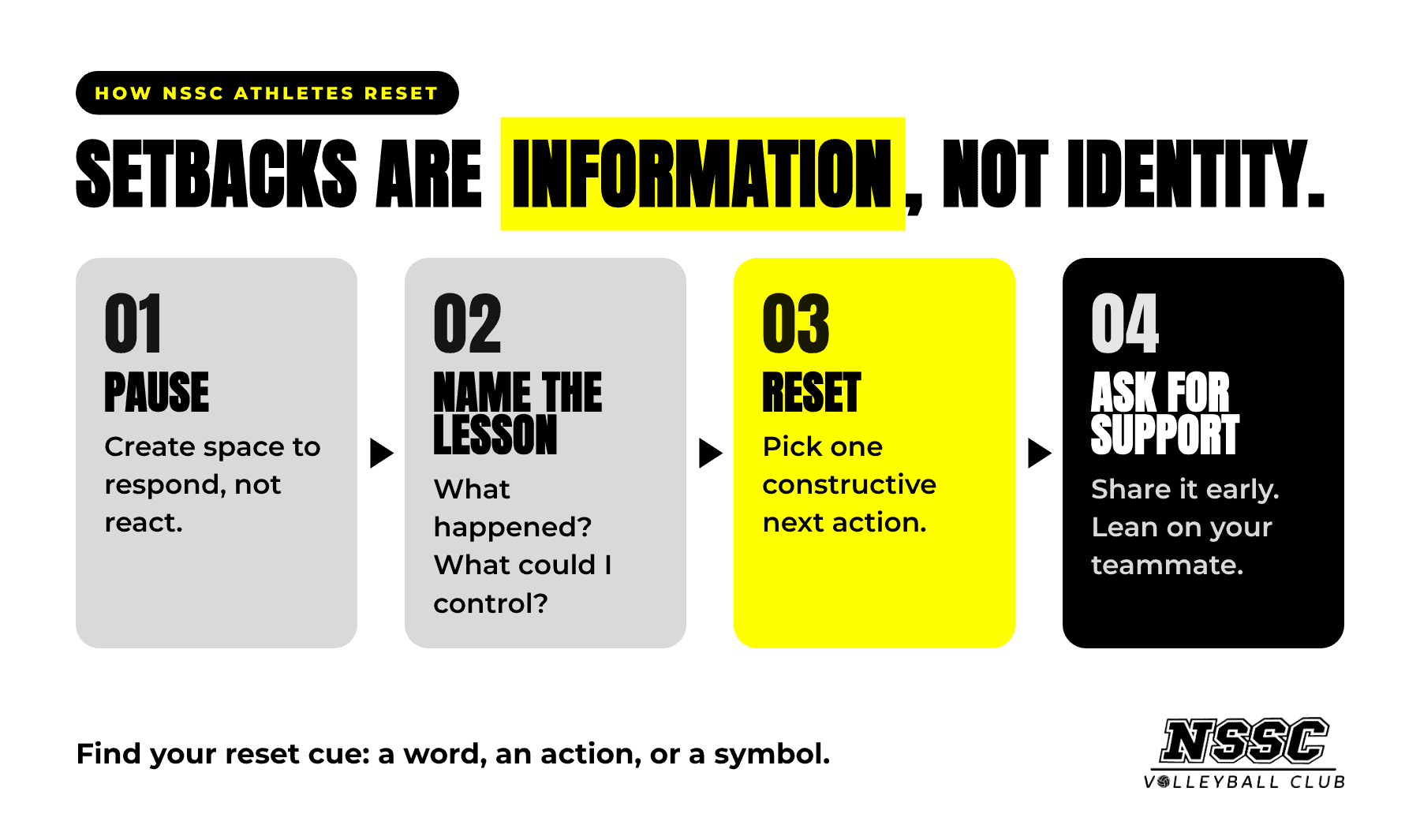
One idea guides how we handle tough moments: setbacks are information, not identity. A bad match doesn’t define a player. It tells us what to work on next.
When something goes wrong, we teach athletes to:
- Pause before reacting. Create a little space so they can respond thoughtfully instead of emotionally.
- Name the lesson. What happened? What was within our control? What can improve?
- Reset quickly. Choose one constructive next action instead of dwelling on the mistake.
- Ask for support. Share challenges early so they can be worked through together.
Each athlete will find a personal reset cue that works for them. It might be a word, an action, or a symbol. Athletes will also be paired with a teammate who keeps them accountable and knows what to say when things get tough.
Staying Focused Under Pressure
Match point. Serving down by one. A packed gym at a big tournament. Pressure is easier to handle when athletes narrow their attention to what matters most right now.
We’re coaching players to:
- Prioritize clearly by identifying the one outcome that matters in this moment.
- Control the controllables: preparation, effort, communication, and attitude.
- Use a reset cue. Take a breath, refocus on the next step, and begin again.
- Communicate early so problems get raised before they grow.
Building Habits and Ownership On and Off the Court
Mental toughness grows through dependable actions, not occasional bursts of motivation. So we’re asking athletes to:
- Start small with daily actions that are realistic and repeatable.
- Prepare early by planning the next important step before distractions take over.
- Follow through on commitments, even when motivation is low.
- Review regularly to notice what’s working and adjust without giving up on the goal.
Ownership is part of it too. That means being clear about what you’re responsible for, doing what you say you’ll do, owning mistakes and applying the lesson, and keeping the people affected in the loop. These are skills that carry into the classroom, a first job, and everything after volleyball.
A Culture Where Mental Toughness Can Grow
Athletes don’t build mental toughness alone. It grows in a culture where people feel respected, encouraged, and accountable, and our coaches lead that behavior by:
- Checking in and making space for an honest answer
- Encouraging effort, recognizing persistence, preparation, and improvement, not only outcomes
- Challenging constructively with clear, respectful feedback that helps players grow
- Sharing the load when pressure or priorities get hard to manage
- Celebrating progress and connecting wins to the behaviors that created them
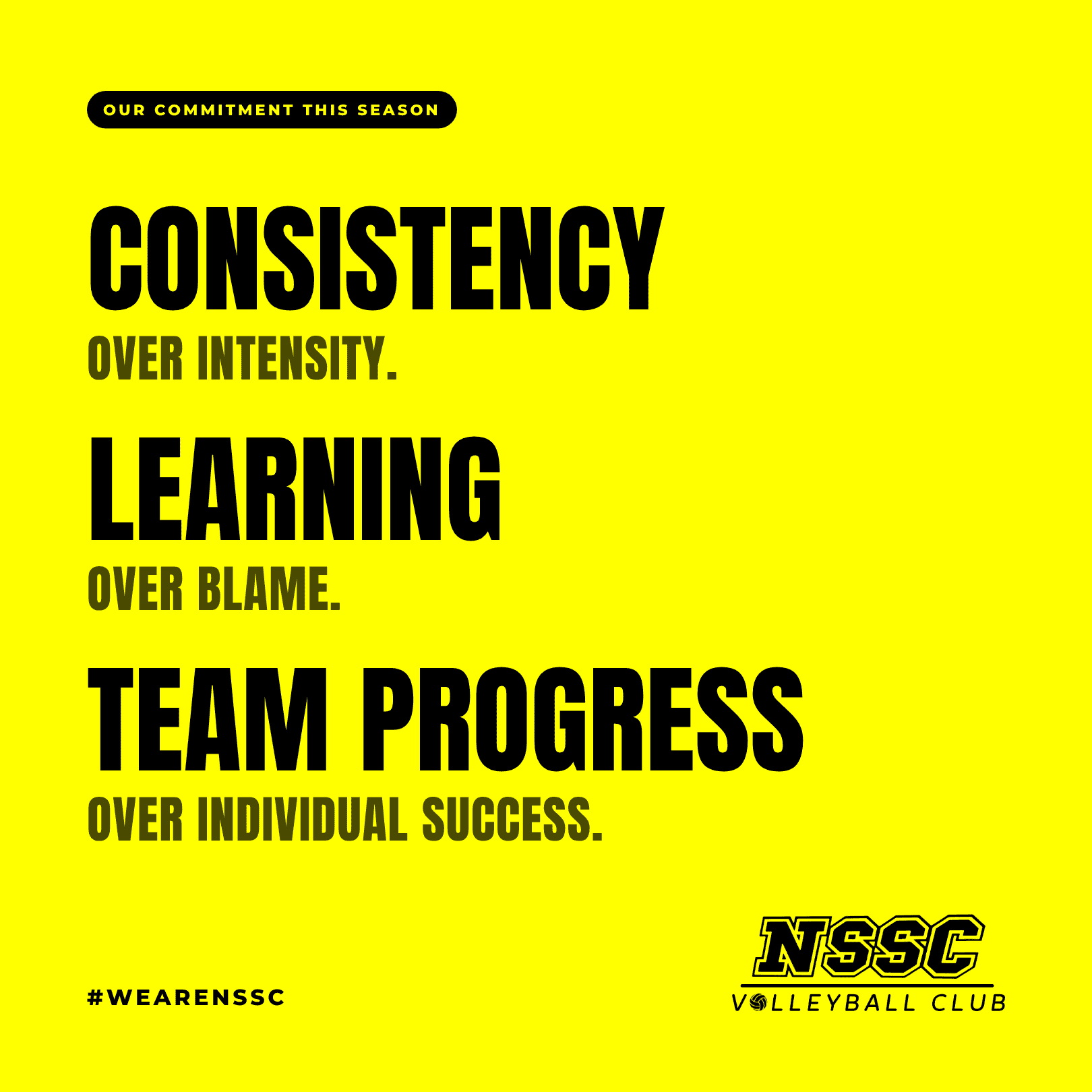
Our commitment as a club: we will choose consistency over intensity, learning over blame, and team progress over individual success.
Our 3 Priorities for the Season
| Priority | What it looks like |
|---|---|
| 1. Build the habit | Choose one important daily or weekly behavior and track it consistently. |
| 2. Reset with purpose | When something goes wrong, identify the lesson and take the next useful step. |
| 3. Strengthen the team | Check in, communicate early, and offer practical support before it’s requested. |
How Parents Can Support Volleyball Mental Toughness at Home
Families play a big role here. A few simple ways to reinforce what your athlete is learning in the gym:
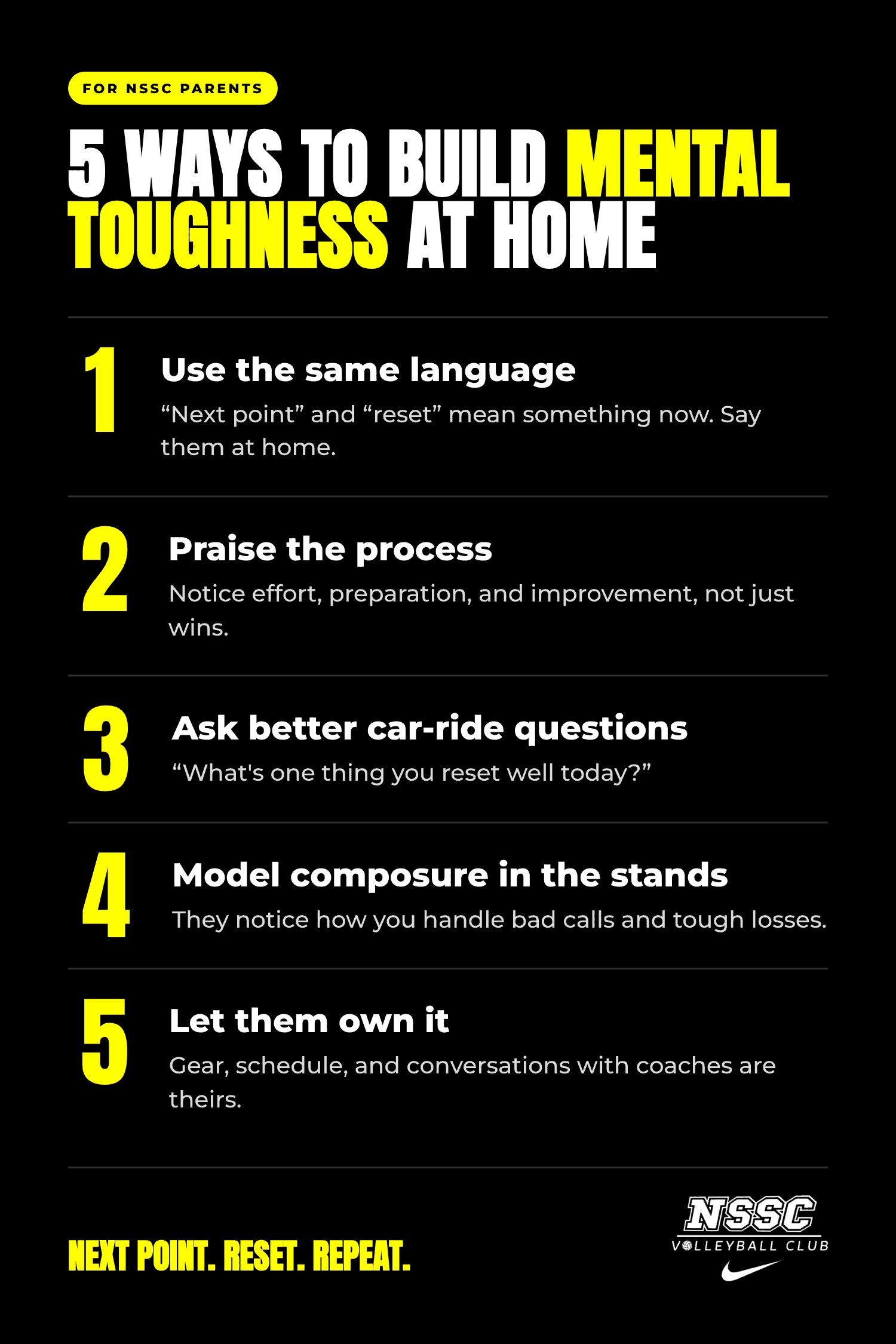
- Use the same language. “Next point” and “reset” mean something to your athlete now. Hearing it at home makes it stick.
- Praise the process. Notice effort, preparation, and improvement, not just wins and stats.
- Ask better car-ride questions. Try “What’s one thing you reset well today?” or “What’s one lesson from that match?”
- Model composure in the stands. Athletes notice how the adults around them handle bad calls and tough losses.
- Let them own it. Encourage your athlete to manage their own gear, schedule, and conversations with coaches.
The Car Ride Home: Questions That Build Mental Toughness
Get our free printable with 18 car ride questions built around the four habits that spell N-S-S-C, plus what to ask after a tough day and after a great one.
No spam. Just NSSC tips and news for families. Unsubscribe anytime.
You’re in!
Your car ride questions are ready. Print a copy for the car or save it to your phone.
Download the PDFIt also helps to remember that mental toughness and rest go hand in hand. Pushing through exhaustion isn't toughness. If you're wondering about the difference, our post on volleyball burnout warning signs is a good read. For more sports-parenting ideas, the Positive Coaching Alliance shares helpful resources for families.
Think Strong. Play Stronger.
Skills win rallies. Mental toughness helps athletes win the moments in between, and it helps them grow into confident, resilient young people well beyond the court. This season, we're training it on purpose, one rep at a time.
Want your athlete to grow in a club that coaches the whole player? Check out our tryouts page for upcoming dates and details. NSSC is where every athlete gets to grow, compete, and rise.
Frequently Asked Questions
What is volleyball mental toughness?
It's the ability to stay steady, make good choices, and keep moving forward when a match gets hard. At NSSC, it shows up as four habits that spell out our name: Next-point mindset, Stay present, Set the tone, and Communicate constantly.
Can mental toughness actually be taught?
Yes. We believe mental toughness is trained, not given. Athletes build it through small, repeatable behaviors like reset routines, positive body language, and consistent communication.
Does mental toughness mean my child should play through anything?
No. Mental toughness isn't about ignoring exhaustion, pain, or emotions. It's about responding constructively. Rest, honest check-ins, and asking for support are all part of the approach.
How can parents help build mental toughness?
Use the same "next point" language at home, praise effort and improvement over results, ask reflective questions after matches, and model calm behavior in the stands.