
If your daughter has gone quiet on the drive home from practice, started dreading the gym she used to love, or seems more worn down than a teenager should be, you are not imagining it. Volleyball burnout is real, it is rising fast among young female athletes, and the warning signs are easy to miss until a kid is ready to walk away from the sport entirely. The good news? Burnout is preventable. Here at NSSC, we believe in pushing athletes to grow without ever pushing them past the point of loving the game — and that starts with parents knowing what to watch for.
Table of Contents
Why Volleyball Burnout Is on the Rise for Girls
Youth sports have changed. What used to be a seasonal activity has, for many kids, become a year-round, single-sport grind. And the numbers tell the story.
Roughly 70% of kids quit organized sports by age 13, according to the American Academy of Pediatrics — and the number one reason isn’t lack of talent or playing time. It’s that the sport simply stopped being fun.
For girls especially, the pressure adds up quickly. Female student-athletes report overwhelming anxiety at more than double the rate of their male teammates, and depressive symptoms affect up to a third of them. When you stack academic stress, social pressure, and a packed training calendar on top of that, it’s no wonder so many talented young players hit a wall.
The specialization trap
One of the biggest drivers of burnout is early sport specialization — funneling a child into one sport, year-round, before they’re physically or emotionally ready. Research shows kids who specialize before age 12 are about twice as likely to quit sports by 15, while multi-sport athletes report more enjoyment, less stress, and are far more likely to keep playing into college.
7 Warning Signs of Volleyball Burnout Parents Should Know
Burnout rarely shows up as one dramatic moment. It builds slowly. Here are the signs we coach parents to watch for:
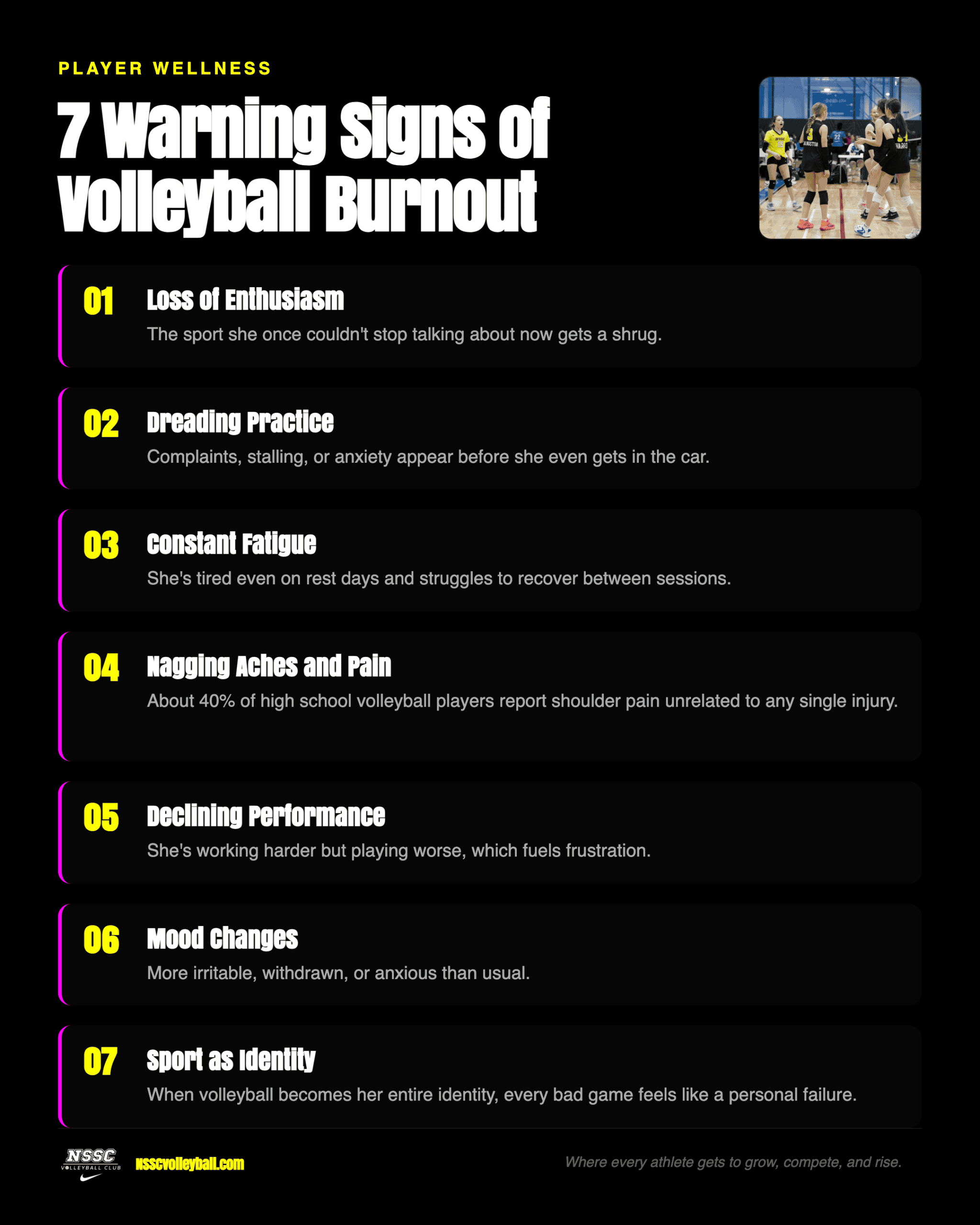
- Loss of enthusiasm — the sport she once couldn’t stop talking about now gets a shrug.
- Dreading practice — complaints, stalling, or anxiety before she even gets in the car.
- Constant fatigue — tired even on rest days, struggling to recover between sessions.
- Nagging aches and overuse pain — about 40% of high school volleyball players report shoulder pain unrelated to any single injury.
- Declining performance — working harder but playing worse, which fuels frustration.
- Mood changes — more irritable, withdrawn, or anxious than usual.
- “My whole life is volleyball” — when a player’s entire identity rides on the sport, every bad game feels like a personal failure.
That last one matters more than most parents realize. A 2025 study of female adolescent volleyball players found that athletes who tied their identity most tightly to the sport had significantly higher levels of anxiety and depression. It’s not volleyball that hurts kids — it’s volleyball becoming the only thing.
How to Prevent Volleyball Burnout (Without Quitting the Sport)
Preventing burnout doesn’t mean caring less about the game. It means protecting your athlete so she can keep playing the sport she loves for years to come. The fixes are simpler than most families expect.
Build in real rest
Rest isn’t laziness — it’s how bodies and minds rebuild. Pediatric sports medicine experts recommend:
- At least 1–2 days off per week from sport-specific training and competition.
- 2–3 months off per year from that one sport (it can be split into one-month chunks).
- Avoiding year-round play in a single sport with no meaningful breaks.
Those breaks let the same overworked shoulders, knees, and growth plates actually recover — and they give a kid space to miss the game instead of resenting it.
Encourage more than one sport
It can feel counterintuitive, but playing other sports often makes a better volleyball player. Cross-training builds different muscles, sharpens overall athleticism, and keeps the mental load lighter. Multi-sport athletes consistently report higher enjoyment and lower burnout rates.
Keep her identity bigger than the box score
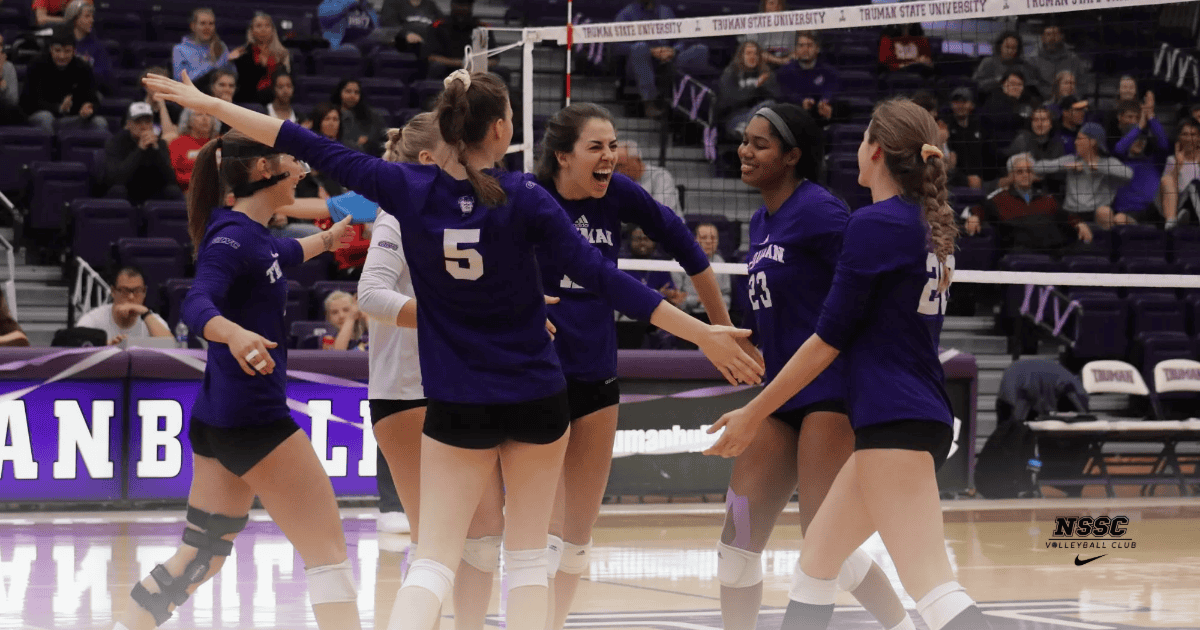
Remind your athlete — often — that your love and pride aren’t tied to her stat line. Ask about her friends, her classes, and her life off the court. The players who last are the ones who know they’re more than an outside hitter.
Watch out for the “nationals or bust” mindset
Here’s a hard truth worth saying out loud: if your child’s team treats a bid to nationals as the only thing that matters — if the whole season is measured by one tournament and one medal — that’s not a healthy place for a young athlete to put her entire identity.
The research is clear that players who tie their whole sense of self to the sport carry the highest levels of anxiety and depression, and chasing a single trophy at all costs is a fast track to burnout. She should be having fun. She should see her teammates as her people, not as threats to her spot the moment she has one rough game.
When the only thing being rewarded is the medal, kids start competing against their own friends instead of growing alongside them — and that pressure steals the joy right out of the gym. Winning is fun and we love to compete, but there is so much more to volleyball than one weekend in the summer: the friendships, the confidence that carries into the classroom, the discipline that shapes who she becomes, and the simple love of the game. A medal is a great memory. The athlete your daughter grows into is the real win.
Choose an environment built on development, not pressure
The club culture your child trains in matters enormously. That’s exactly why the way we coach at NSSC focuses on effort, attitude, and steady growth — teaching athletes to push past their limits without burning out. Our local, low-travel model means more time actually playing and developing, and fewer exhausting weekends on the road. We’re proud to be the largest and only Nike-sponsored club in Southeast Missouri, but we’re prouder of being a place where every athlete gets to grow, compete, and rise — at a pace that keeps the love of the game alive.
So what does a development-first environment actually look like?
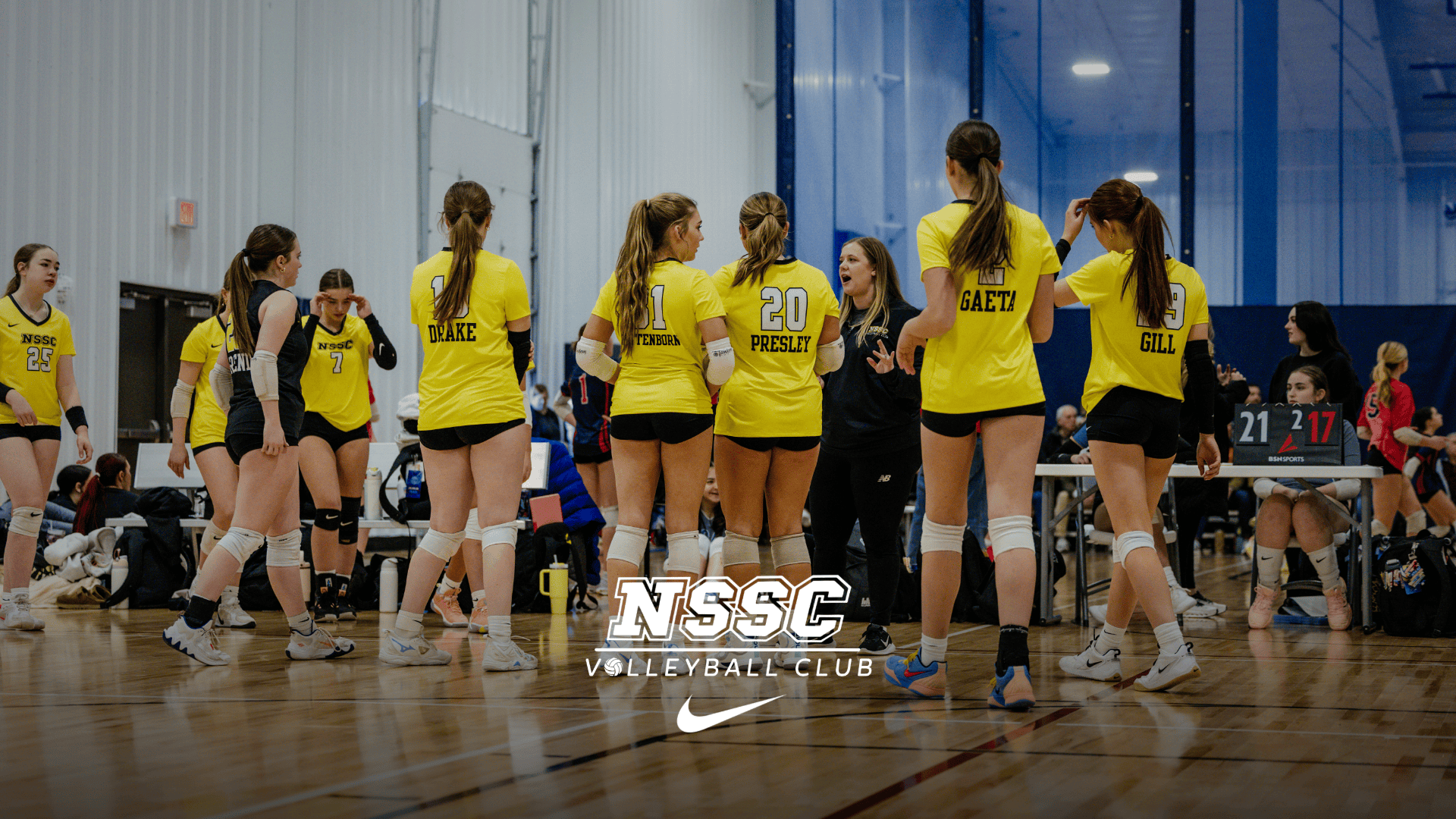
It’s coaches who invest in every player on the roster, not just the stars — because a kid who feels seen works harder and worries less. It’s a culture where teammates pick each other up after a tough set instead of quietly hoping someone else struggles. It’s celebrating progress, not just the scoreboard, and giving athletes room to make mistakes, learn, and come back stronger. When a player knows her team has her back and her coaches are in her corner, the fear melts away and the fun comes back — and that’s when real growth happens. That’s the kind of home we work to build for the NSSC Family every single season.
Frequently Asked Questions
Q: What is volleyball burnout?
A: Volleyball burnout is physical and emotional exhaustion caused by too much training, too little rest, and too much pressure — often from year-round, single-sport play. It shows up as loss of enjoyment, fatigue, declining performance, and rising anxiety, and it’s one of the top reasons young athletes quit.
Q: How many days off should a young volleyball player take?
A: Pediatric experts recommend at least 1–2 days off from sport-specific training each week, plus 2–3 months away from the sport over the course of a year to recover physically and mentally.
Q: Does playing other sports help prevent burnout?
A: Yes. Multi-sport athletes report more enjoyment, lower stress, and lower burnout rates than kids who specialize early — and they’re more likely to keep playing into college. Cross-training also builds well-rounded athleticism that benefits volleyball.
Q: Is some stress in youth volleyball normal?
A: Absolutely. Healthy challenge and nerves before a big match are part of growing as a competitor. The concern is chronic stress that steals a kid’s joy, hurts her sleep or mood, or makes her want to quit a sport she once loved.
Protect the Love of the Game
A little awareness goes a long way. When parents prioritize rest, encourage a life beyond the court, and choose a club that develops the whole athlete, burnout becomes far less likely — and the game stays something your daughter genuinely loves. That’s the future every volleyball parent wants.
Want a club that pushes your athlete to grow without burning her out? Learn more about the NSSC Family and find the program that’s the right fit for your player. 🏐