
If your athlete dreams of playing volleyball in college, the recruiting process can feel overwhelming — especially if your family is navigating it for the first time. Where do you start? When do coaches actually start watching? What should your player be doing right now?
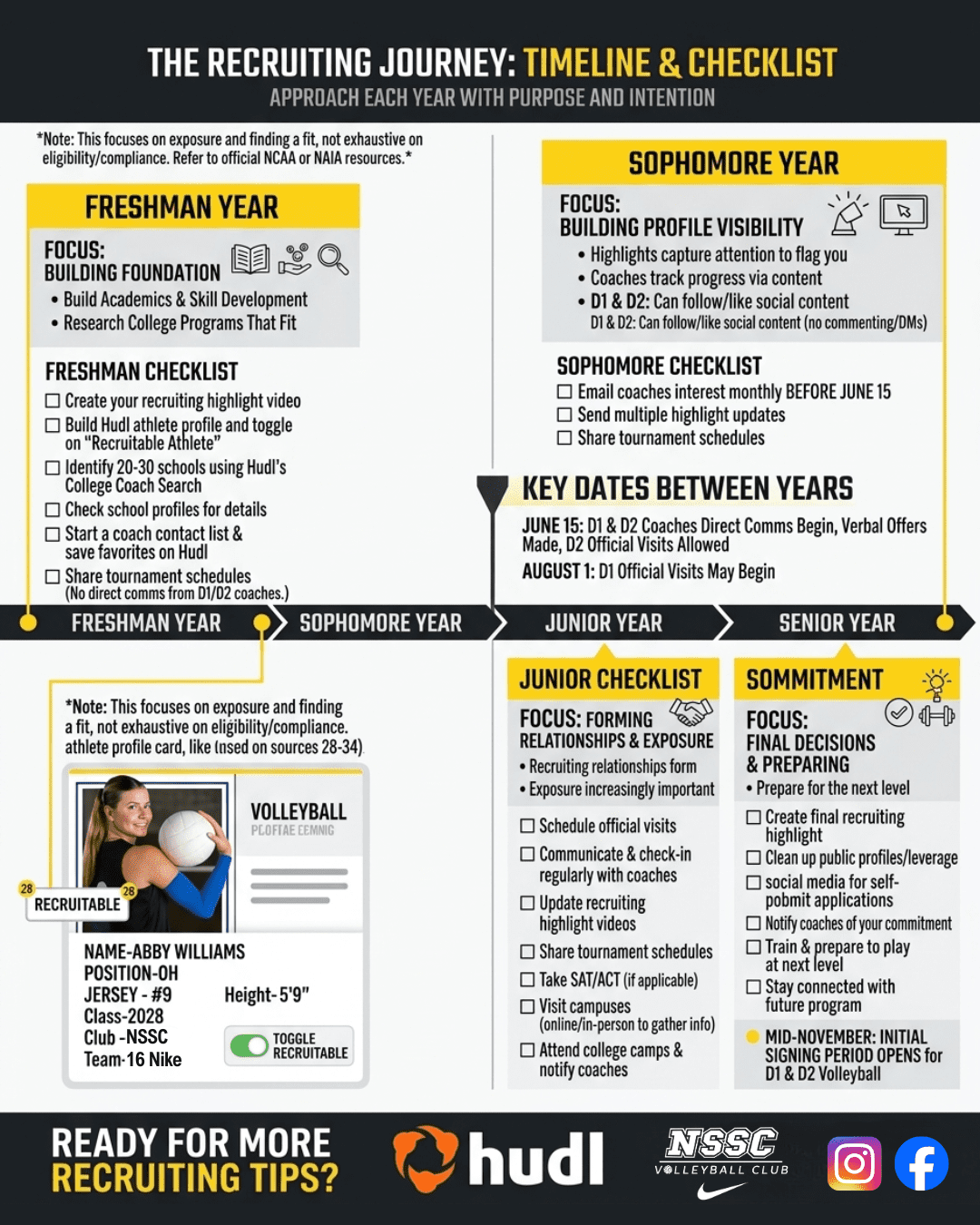
The truth is, the volleyball recruiting journey doesn’t start senior year. It starts much earlier than most families realize, and each year brings different priorities, deadlines, and action steps. That’s why we put together a complete volleyball recruiting checklist that walks you through what to focus on from freshman year all the way through signing day.
Whether your athlete is just getting started in club volleyball or already catching the attention of college programs, this guide will help your family stay organized, stay ahead, and stay confident through every stage.
Table of Contents
Freshman Year: Build the Foundation
Here’s something that surprises a lot of families — the recruiting process has action steps even in freshman year. Division I and Division II coaches can’t communicate directly with recruits or their families this early, but that doesn’t mean nothing is happening behind the scenes. Coaches are watching. They’re browsing highlight videos, following social media accounts, and quietly keeping tabs on athletes who catch their eye.
This is the time to lay the groundwork. Focus on three things: skill development, strong academics, and building a visible athlete profile.
Key steps for freshman year:
- Create a recruiting highlight video (even a basic one — you’ll update it later)
- Build an athlete profile on Hudl and toggle on “Recruitable Athlete”
- Identify 20–30 schools of interest using Hudl’s College Coach Search tool
- Check out school profiles to learn what each program offers
- Start a coach contact list and save your favorite schools
- Share your tournament schedules so coaches can find you
- Visit campuses online or in person (just to gather information — these are not official visits)
- Attend college camps and let those coaches know you’ll be there
- Clean up public social media profiles and start using them as a self-promotion tool
The goal here isn’t to land an offer. It’s to get organized, get visible, and start building the habits that will serve your athlete for the next three years.
Sophomore Year: Get on the Radar
For most of sophomore year, college coaches are still restricted from reaching out directly. But here’s what they can do — they can follow your athlete on social media, like their posts, and share or repost content. They just can’t comment or send direct messages yet.
This is a critical window. Your athlete’s highlight video becomes the primary screening tool coaches use to decide who to track. Think of it as the first impression that gets your player flagged in a coach’s system. From there, they’ll follow along through the content your athlete posts.
Key steps for sophomore year:
- Email coaches about your athlete’s interest — at least monthly before June 15
- Share tournament schedules consistently
- Send multiple highlight video updates to coaches on your contact list
- Continue refining and updating recruiting highlight videos
Key dates to mark on the calendar:
- June 15 (between sophomore and junior year): Division I and Division II coaches may begin direct communication. Verbal offers can be made, and official visits to Division II colleges are allowed.
- August 1: For Division I programs, official visits may begin.
June 15 is a big deal. Everything your athlete does before that date — the highlight videos, the emails, the tournament schedules — is what positions them for those first real conversations with coaches.
Junior Year: This Is Where Relationships Form
Junior year is when the volleyball recruiting checklist shifts from preparation to connection. Recruiting relationships start forming, exposure becomes increasingly important, and the conversations get real.
This is the year to narrow the list, deepen communication, and make sure coaches are seeing your athlete’s best and most current work.
Key steps for junior year:
- Narrow down your college list to serious contenders
- Schedule official visits to your top schools
- Communicate and check in regularly with coaches — this is a relationship, not a one-way email
- Share tournament schedules (yes, every season — coaches use these to plan their evaluations)
- Update recruiting highlight videos — some schools may also want full-game footage
- Take the SAT/ACT if applicable for your target schools’ entrance requirements
Junior year demands consistency. The families who stay organized, keep communication flowing, and continue sharing updated film are the ones who keep their athletes top-of-mind for coaches building their rosters.
Senior Year: Finish Strong and Make It Official
Senior year is about final decisions, clear communication, and preparing for the next level. By now, your athlete should have a short list of programs they’re seriously considering, and the conversations with coaches should be focused and professional.
Key steps for senior year:
- Create one final, polished recruiting highlight video
- Share tournament schedules through the end of your season
- Submit college applications on time
- Notify coaches of your commitment once your decision is made
- Stay connected with your future program — the relationship doesn’t stop at commitment
- Train and prepare to play at the next level
Key date:
- Mid-November: Initial signing period opens for Division I and Division II volleyball.
After committing, the work isn’t over. Continue building the relationship with your future coaching staff, stay in shape, and get mentally ready for college athletics. The athletes who show up on day one already prepared are the ones who earn early playing time.
How NSSC Prepares Athletes for the Recruiting Journey
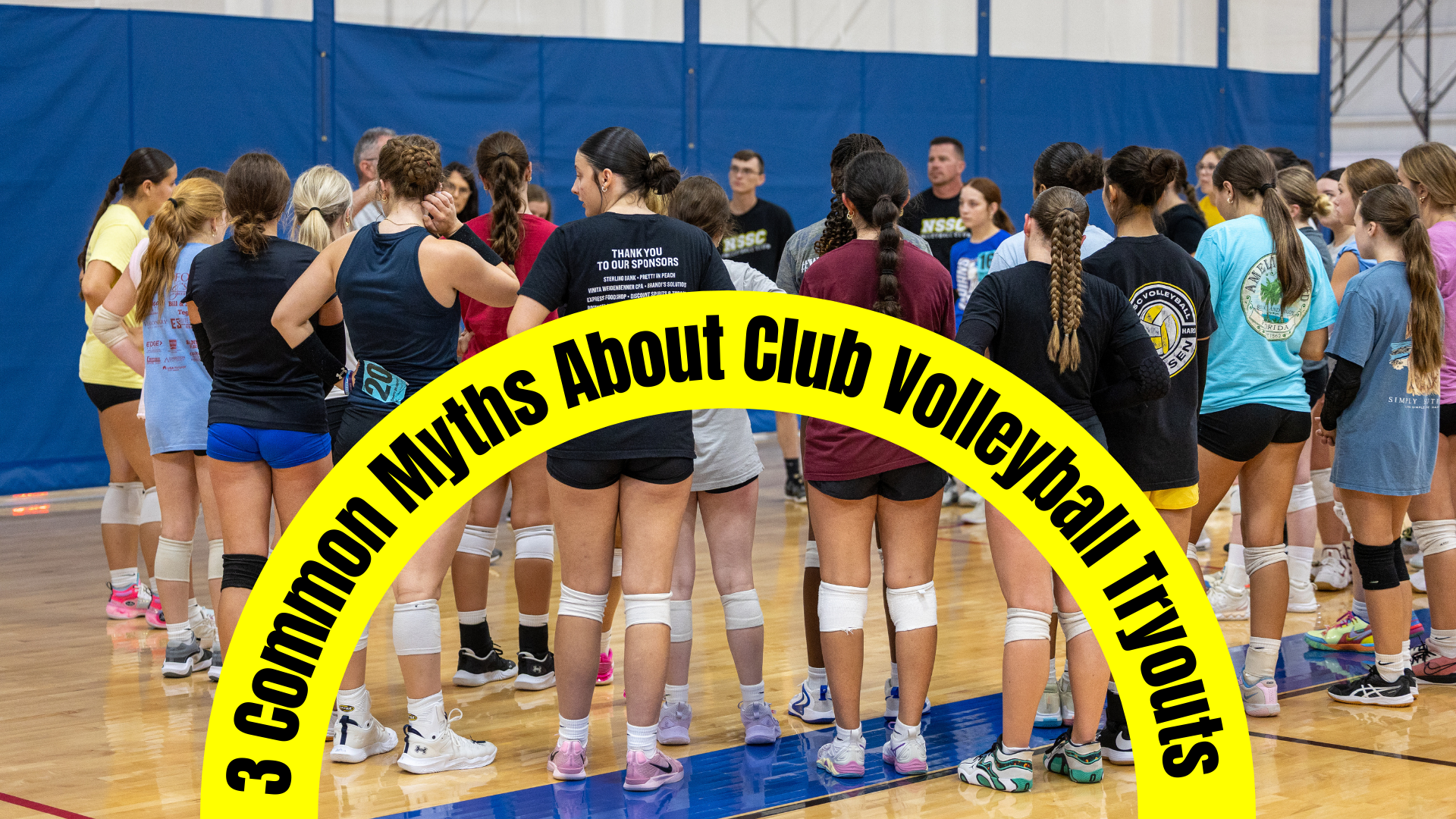
At NSSC Volleyball Club, we don’t just develop volleyball players — we develop athletes who are ready for what comes next. With 300+ athletes, 30+ teams, and team levels from developmental (local teams) all the way to our top-tier Nike teams, we meet every player where they are and coach them forward.
Our partnership with Hudl means every NSSC athlete gets access to the tools college coaches are actually using to evaluate recruits. That’s not a perk reserved for our top teams — it’s available to every player in the club. Because we believe opportunity shouldn’t be reserved just for “elite” athletes.
We’ve seen it happen year after year — NSSC athletes going on to play college volleyball at programs across the country. It starts with great coaching, continues with the right exposure at competitive tournaments, and comes together when families have a clear plan to follow.
That’s exactly what this checklist is for.
Download Your Free Volleyball Recruiting Checklist
We’ve partnered with Hudl to bring you a printable, year-by-year volleyball recruiting checklist that your family can use to track every step of the journey — from freshman year through signing day.
No guesswork. No missed deadlines. Just a clear, organized path to help your athlete get noticed and find the right college fit.
[Download the Free Volleyball Recruiting Checklist Here]
Print it out, stick it on the fridge, and check off each step as you go. Your athlete’s college volleyball journey starts now — and NSSC is here to help every step of the way.
Have questions about the recruiting process or how NSSC prepares athletes for the next level? Reach out to us at nsscvolleyball.com or follow us on Instagram @nsscvolleyball for more tips, recaps, and club news.
Frequently Asked Questions
Q: When should my volleyball player start the recruiting process?
A: The earlier, the better. While college coaches can’t contact athletes directly until after June 15 between sophomore and junior year, freshmen should already be building highlight videos, creating athlete profiles on Hudl, and researching schools. The groundwork you lay early makes a huge difference when communication opens up.
Q: What is the most important thing college volleyball coaches look at?
A: Your athlete’s highlight video is the primary screening tool coaches use. It’s what captures their attention and gets your player flagged in their system. After that, coaches track progress through the content athletes post — updated film, tournament schedules, and social media activity all play a role.
Q: Does my child need to be on a top-level club team to get recruited?
A: Not necessarily. College programs exist at every level — Division I, Division II, Division III, NAIA, and junior college. What matters most is that your athlete is developing their skills, getting quality coaching, and making themselves visible to the right programs. At NSSC, we have athletes across many levels who go on to play in college.
Q: What are the key recruiting dates for volleyball?
A: June 15 (between sophomore and junior year) is when Division I and II coaches can begin direct communication and verbal offers can be made. August 1 is when Division I official visits may begin. Mid-November of senior year is when the initial signing period opens for Division I and II volleyball.
Q: How can NSSC help with the recruiting process?
A: Every NSSC athlete receives a Hudl account, giving them access to the same tools college coaches use to evaluate talent. Our coaching staff helps athletes develop the skills and game IQ that college programs look for, and our competitive tournament schedule provides the exposure athletes need to get noticed. We’re not just a club — we’re a launchpad for young athletes’ potential. We can also reach out to colleges on behalf of the athletes.